
Rehab Exercise and Movement Therapy
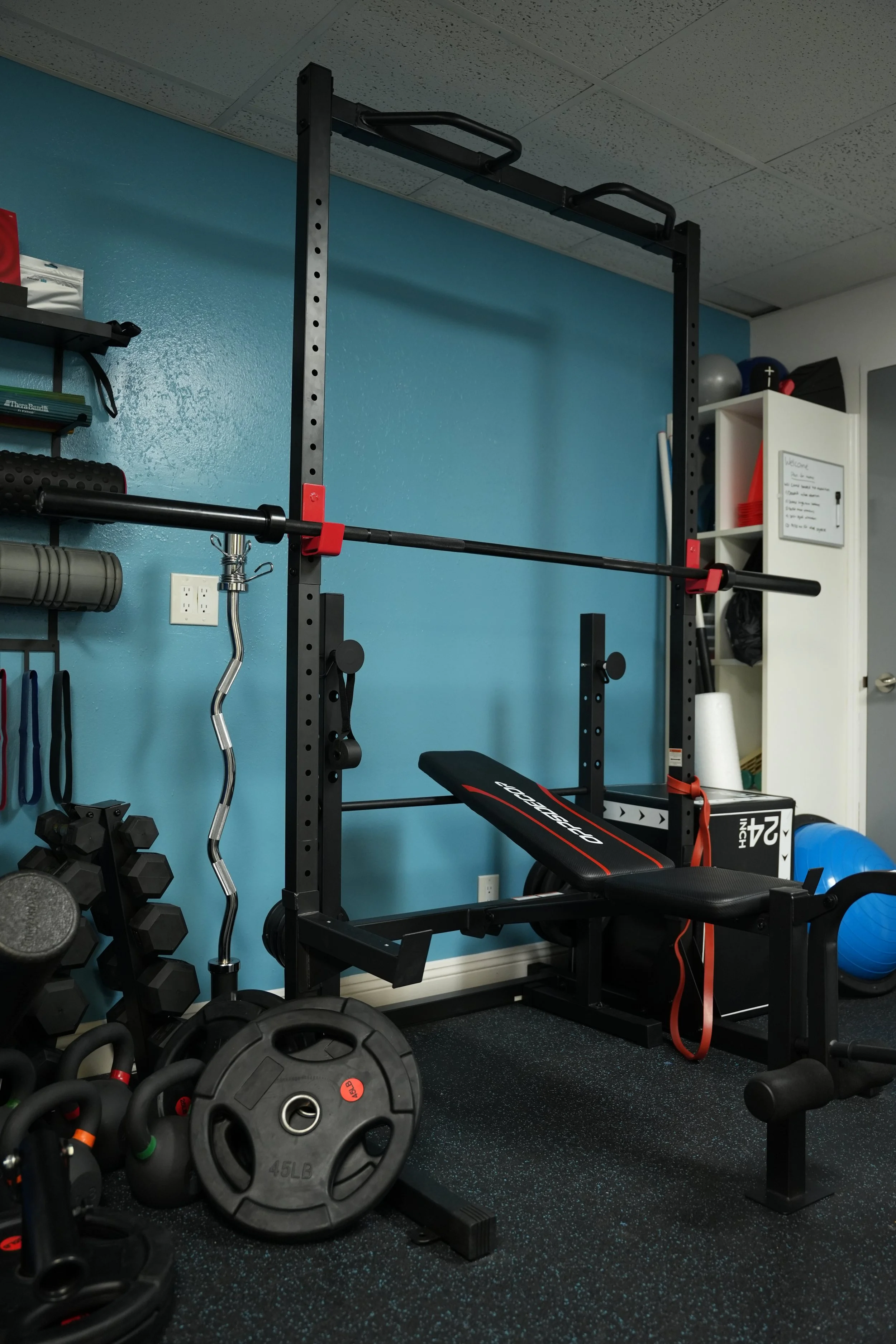
Everything else we do buys you time. This is what makes it permanent.
The adjustment restored the joint motion. The soft tissue work released the fascia. The shockwave kicked a stalled tendon back into an active healing phase. The tape held the correction while your nervous system caught up. You feel better. You're moving better. Things are finally shifting.
Now here's the honest question: what's going to keep it that way?
Because if nothing changes about how you move, how you load, how you stabilize — the pattern that created the problem is still running in the background. And given enough time, it will pull you right back to where you started. Not because the treatment didn't work. But because the treatment was never meant to be the whole answer.
This is the whole answer.
Your body doesn't just need to be fixed. It needs to be retrained.
Pain and dysfunction don't just damage tissue. They change movement. When something hurts, your brain reroutes. It finds a workaround — a way to get the job done without loading the thing that's injured. And that workaround becomes a habit. The habit becomes your default. And long after the tissue has healed, the compensation is still running.
That's why people say things like "my back went out again" or "it keeps coming back every few months." The tissue healed. The pain left. But the movement pattern that overloaded it in the first place was never corrected. So the same segment, the same tendon, the same joint gets hammered again because your body never learned another way.
Corrective exercise and movement therapy exist to close that gap. We identify where the breakdown is — not just where it hurts, but where the movement system failed — and we rebuild it from the ground up.
This isn't personal training. It's not generic stretching. It's clinical movement work.
There's a meaningful difference between exercise and corrective exercise. A personal trainer gives you exercises to get stronger, burn calories, or build muscle. That's valuable, but it operates on the assumption that your body is moving correctly to begin with.
We don't make that assumption.
We assess first. Where is the mobility deficit? Where is the stability deficit? Which muscles are neurologically inhibited and which are chronically overactive? Is the movement limitation driven by a joint restriction, a tissue adhesion, a motor control deficit, or a strength problem? Because the exercise prescription is completely different depending on the answer.
A hip that won't extend because the joint capsule is restricted needs mobilization, not glute bridges. A shoulder that's "weak" because the scapular stabilizers aren't firing needs motor control retraining before it needs load. A low back that keeps seizing up doesn't need more core work — it might need less bracing and more segmental control.
The wrong exercise reinforces the wrong pattern. The right exercise — dosed correctly, sequenced correctly, and progressed at the right time — rewires it.
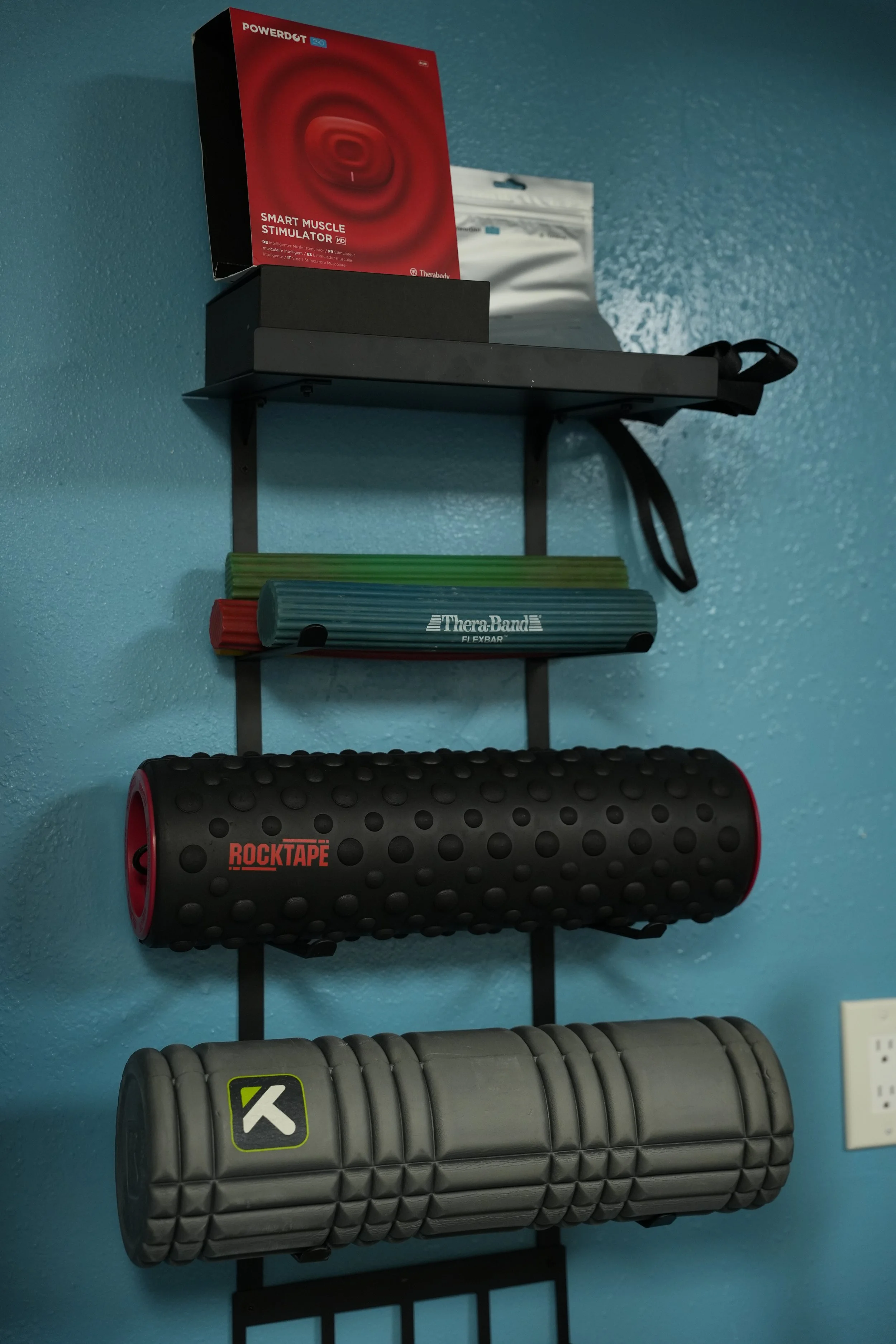
How we approach it.
Phase 1 — Identify the pattern.
Before we prescribe a single exercise, we need to understand how you move. Not just where it hurts, but how your body organizes itself under load, in transition, and at rest. We look at how you squat, hinge, push, pull, rotate, and stabilize. We test individual joints and muscles. We identify what's restricted, what's unstable, what's compensating, and what's driving the whole chain.
This is where most programs fail. They skip the assessment and jump straight to exercises based on the diagnosis. But "low back pain" isn't a movement diagnosis. Two people with identical MRIs can have completely different movement dysfunctions. The imaging tells you what's damaged. The movement assessment tells you why.
Phase 2 — Restore the prerequisites.
You can't strengthen a pattern that doesn't exist yet. Before we load anything, we make sure the raw materials are in place — adequate joint mobility, appropriate tissue extensibility, and basic neuromuscular activation of the muscles that need to be doing the work.
This is where manual therapy and exercise start to overlap. We might mobilize a joint, release a fascial restriction, or use taping to facilitate a muscle — and then immediately follow it with a targeted exercise that locks in the new range or activation pattern. The treatment opens the door. The exercise teaches your body to walk through it.
Phase 3 — Build motor control.
This is the piece most people skip and it's the most important one. Motor control is your brain's ability to coordinate the right muscles, in the right sequence, at the right time, with the right amount of force. It's not strength. It's skill.
A lot of rehab goes straight from pain relief to strengthening without ever retraining the movement itself. That's like teaching someone to drive faster before they've learned to steer. We slow things down, isolate the pattern, and practice it until the new motor program is reliable. Then we start adding complexity, speed, and load.
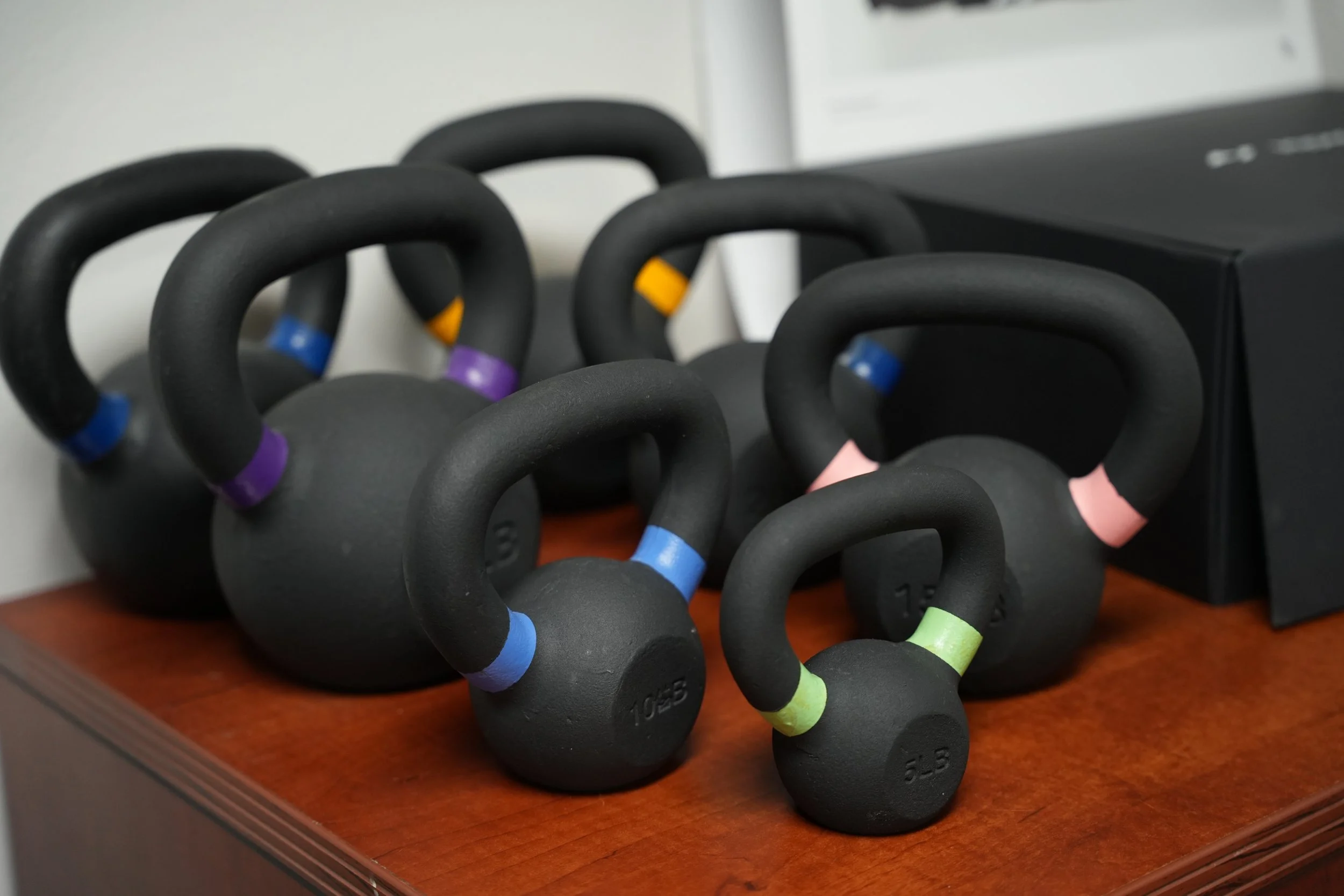
Phase 4 — Load and progress.
Once the pattern is clean, we load it. Progressively. Systematically. This is where you actually build the strength, endurance, and resilience that protects you going forward. This is where rehab starts to look more like training — because at a certain point, that's exactly what it should become.
The goal isn't to keep you doing "rehab exercises" forever. It's to graduate you from rehabilitation into training that's informed by what we found. Your corrective work becomes your warm-up. Your movement competency becomes the foundation your training sits on. And the thing that used to break down every few months now has the structural and neurological support to handle what you throw at it.
What this looks like in practice.
Some of this happens in-clinic during your sessions. Some of it is homework — a targeted program you do on your own between visits that's specific to your movement dysfunction, not a generic handout pulled from a folder.
We progress it as you progress. The exercises you get on week one won't be the same exercises you're doing on week six. If they are, something's wrong. Your body adapts, your movement changes, and the program should change with it.
And if you're already training — running, lifting, playing a sport, doing CrossFit, whatever it is — we integrate the corrective work into what you're already doing so it doesn't feel like a second job. The fastest way to make someone abandon their rehab is to hand them 45 minutes of band exercises they have to do on top of their actual training. We don't do that. We make the corrective work part of your training, not a separate chore that competes with it.
What we address with corrective exercise and rehab.
Recurring injuries that keep coming back despite treatment
Post-surgical rehabilitation — knees, shoulders, spines, hips
Chronic low back pain driven by motor control deficits
Neck and shoulder dysfunction from years of desk posture
Hip impingement, labral issues, and movement-based hip pain
Runner's knee, IT band syndrome, and lower extremity overuse injuries
Return-to-sport after injury or extended time off
Movement limitations that are holding back your training
"I've been told to stretch and strengthen but no one's told me what or why"
The general feeling that your body doesn't move the way it used to — and you want it back
This is where treatment becomes transformation.
Everything else we offer in this clinic is designed to remove barriers — pain, restriction, tissue dysfunction, joint fixation. Those tools are powerful, and they work. But they work best when they're clearing the path for something to be built.
This is the building.
If you've been stuck in a cycle of treatment that helps but never holds — if you keep going back for the same adjustment, the same massage, the same release — the missing piece probably isn't another treatment. It's the movement work that should have come after it.
We'll assess where you are, identify what's breaking down and why, and build a plan that doesn't just get you out of pain — it gets you to a place where the pain doesn't have a reason to come back.